
Game Preview: Ohio State vs Northwestern
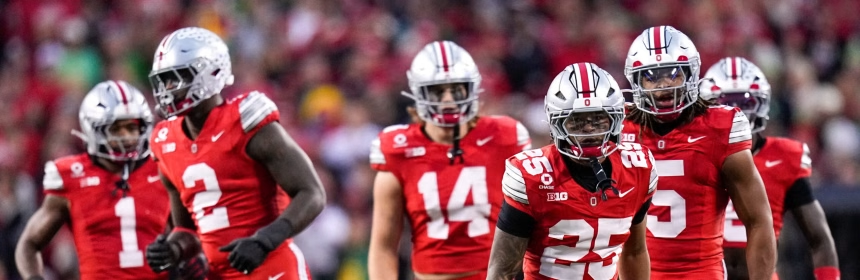
There are weeks when an Ohio State game is about protecting a ranking, proving championship credentials or surviving an opponent capable of changing the shape of a season. This is not quite that kind of week. The Buckeyes have already watched their season change shape twice in two Saturdays, first in a 30–18 loss at USC and then in a 41–28 home loss to Oregon. A team that entered the final day of October at 6–1 and was still thinking seriously about the Big Ten Championship Game and College Football Playoff now enters the middle of November at 6–3, trying to rediscover its footing before the season’s final stretch gets away from it completely.
That does not make Saturday’s meeting with Northwestern meaningless. It makes it revealing.
No. 20 Ohio State has three regular-season games remaining, including a trip to Nebraska and the annual showdown with Michigan. The playoff path has narrowed to the point that the Buckeyes no longer control it, and their Big Ten title hopes require help in addition to a perfect finish. What they can control is whether the final month becomes a slow fade or the beginning of a response. Ohio State still has one of the best receivers in the country, a defense that has been excellent for most of the season, a talented young quarterback being asked to grow up in real time and enough ability across the roster to finish 9–3. The next three weeks can still alter how this season is remembered, but only if the Buckeyes stop allowing the same problems—line inconsistency, an unreliable running game, negative plays and missed situational opportunities—to define them.
Northwestern arrives in Columbus with its own urgency. The Wildcats are also 6–3, have also lost two straight and have also been forced to turn to a backup quarterback. David Braun’s team has already secured bowl eligibility, but its five-game winning streak was followed by losses at Oregon and at home against Iowa. Northwestern does not have Ohio State’s roster, yet it has enough offensive balance, a productive veteran receiver and a disruptive linebacker to punish a team that is still carrying the weight of the previous two weeks.
Saturday is not a championship game, but it is a test of professionalism, development and pride. Ohio State needs a win. More importantly, it needs to look like a team that understands exactly what has gone wrong and is ready to do something about it.
Game Information
- Matchup: Northwestern Wildcats (6–3, 3–3 Big Ten) at No. 20 CFP / No. 21 AP Ohio State Buckeyes (6–3, 4–2 Big Ten)
- Date: Saturday, November 14, 2026
- Kickoff: Noon ET
- Location: Ohio Stadium, Columbus, Ohio
- Television: FOX
- Streaming: FOX One and participating TV providers
- Radio: Ohio State Sports Network / 97.1 The Fan in Columbus
- Betting line: Ohio State -12.5
- Over/under: 45.5
- Series: Ohio State leads 66–14–1
- Last meeting: Ohio State defeated Northwestern 31–7 at Wrigley Field in 2024
Ohio State is No. 20 in the second College Football Playoff ranking, No. 21 in the Associated Press poll and No. 20 in the Coaches Poll. Northwestern dropped out of the Coaches Poll after its loss to Iowa and is receiving votes. The Buckeyes are 4–0 against Northwestern during the Ryan Day era, including victories in the 2018 and 2020 Big Ten Championship Games, but this will be the Wildcats’ first visit to Ohio Stadium since 2016.
The betting market opened around Ohio State -10.5 before moving to -12.5, with a total of 45.5 as of Thursday morning. As always, the line can move before kickoff.
Availability Report
Ohio State will again be without starting quarterback Julian Sayin, who is set to miss his third consecutive game after suffering a fractured right elbow at Indiana. Running back Ja’Kobi Jackson, tight end Max LeBlanc, offensive lineman Jaxon Powell, safety Deshawn Stewart and receiver Brennen Schramm are also listed as out.
The Buckeyes’ questionable list includes receivers Brandon Inniss, Phillip Bell and Brock Boyd, safety Terry Moore, linebacker Eli Lee, and offensive linemen Deontae Armstrong and Max Riley. Boyd has missed three consecutive games and appears unlikely to return this week, while Inniss has played only once in Ohio State’s last four games. The possibility of Bell joining them on the sideline is significant because he has been working as the starting slot receiver in Inniss’ absence.
Northwestern will also be without its starting quarterback. Aidan Chiles is out for a second straight game with an upper-body injury, leaving Nicco Marchiol to make his second start for the Wildcats. Defensive back Josh Fussell, running back Daniel Anderson, linebackers Max Mohring, Jason Reynolds II and Qayvier Johnson, offensive lineman Ezomo Oratokhai and tight end Chris Petrucci are also out.
The Big Ten will issue final game-day designations before kickoff, so players currently listed as questionable remain subject to an update.
Ohio State Preview
Ohio State Offense: Help the Young Quarterback
Luke Fahey’s first two starts have produced the kind of mixed evaluation that usually follows a freshman quarterback. He has shown poise, toughness and legitimate passing ability, but he has also been asked to carry too much of an offense that has not created enough easy football around him. After completing 21 of 38 passes for 260 yards and a touchdown at USC, Fahey went 36 of 50 for 360 yards, two touchdowns and an interception against Oregon. Those are not empty numbers for a player making his second career start, especially against a ranked opponent. Fahey demonstrated that he can move the offense and give Jeremiah Smith opportunities downfield.
The problem is that Ohio State’s offensive structure has forced him to live in obvious passing situations. Against Oregon, the Buckeyes threw 50 times and ran for only 53 yards. Bo Jackson carried 11 times for 48 yards and two touchdowns, while the offensive line struggled to generate dependable movement against an Oregon defense that had been vulnerable on the ground earlier in the season. Ohio State finished with 413 yards and 23 first downs, but it went 0-for-4 on fourth down and failed to score in the second and third quarters. The offense accumulated production without consistently controlling the game.
That distinction matters against Northwestern. The Wildcats allow 149.3 rushing yards per game and are not an opponent Ohio State should have to attack with a one-dimensional plan. The Buckeyes need to give Fahey manageable down-and-distance situations, use play action before Northwestern can sell out to stop it and create enough balance that linebacker Braydon Brus cannot spend the afternoon attacking the backfield. Ohio State averages 147.7 rushing yards per game and 4.0 yards per attempt, numbers inflated by early-season blowouts and not nearly dominant enough for a roster with this much talent. Over the last two games, the run game has alternated between productive stretches and near-disappearance. That inconsistency cannot continue.
Jackson remains the central figure. He has rushed for 685 yards this season and has shown that he can handle a featured workload, but Ohio State has to do more than hand him the ball into crowded boxes and hope his ability solves the blocking. The staff can help with formation, motion, perimeter runs, screens and opportunities for Isaiah West. The offensive line, however, has to supply the foundation. Northwestern has enough experience in its front seven to make this uncomfortable if Ohio State loses first down and allows Brus to dictate the afternoon.
The other major issue is receiver depth. Jeremiah Smith is having another extraordinary season with 69 catches for 1,200 yards and 14 touchdowns, and he enters Saturday only 31 yards from a Big Ten career receiving-yard record. He had seven catches for 133 yards and a touchdown against Oregon, but Northwestern can reasonably assume the passing game will flow through No. 4—especially if Inniss, Bell and Boyd are all unavailable. Kyle Parker, Mylan Graham and tight end Nate Roberts may be required to play larger roles, and one of the most important developmental questions is whether Fahey can build trust with them instead of feeling that every critical play has to become a Smith target.
Ohio State converts 44.1 percent of its third downs, a respectable season figure, but the broader offensive problem is how often a failed early-down run or protection mistake puts the quarterback behind schedule. Fahey has completed 65.3 percent of his passes for 823 yards, five touchdowns and three interceptions this season. Those numbers are encouraging for a freshman reserve. The next step is learning how to control the game rather than merely respond to it. Against Northwestern, Ohio State should not need him to throw 50 times. If it does, that will say more about the offense around him than it does about Fahey.
Ohio State Defense: Rediscover the Standard
For most of the season, Ohio State’s defense gave the Buckeyes room to work through offensive injuries and inconsistency. Even after Oregon’s 41-point performance, the season numbers remain strong: 18.3 points, 287 total yards, 189.9 passing yards and 97.1 rushing yards allowed per game. Opponents are completing only 55.1 percent of their passes and averaging 4.6 yards per play. The Buckeyes have allowed just six passing touchdowns in nine games.
The Oregon loss nevertheless exposed cracks that cannot be waved away by the cumulative statistics. The Ducks converted eight of 17 third downs, accumulated 395 yards and scored on six drives after being shut out in the first quarter. Ohio State did not create a turnover, did not consistently disrupt the quarterback and could not produce the series-changing stop that might have shifted the game. A defense that had spent most of the year protecting the offense suddenly needed protection itself.
Northwestern presents a different challenge. Without Chiles, the Wildcats will lean on Marchiol’s mobility, a rushing attack averaging 190.2 yards per game and the connection between Marchiol and Griffin Wilde. Marchiol completed 24 of 32 passes for 181 yards and a touchdown against Iowa, and he led Northwestern with 52 rushing yards. His ability to move the chains with his legs is particularly important because Ohio State has occasionally allowed mobile quarterbacks to escape after the initial coverage holds.
The Buckeyes’ first job is to make Northwestern one-dimensional. The Wildcats average 31 points and 421.2 yards per game, but they scored only 10 against Iowa and have faced a much more difficult time when opponents control the line of scrimmage. Ohio State should have the defensive front to squeeze the run game, win early downs and make Marchiol operate from the pocket on third-and-long. That requires disciplined rush lanes from Kenyatta Jackson Jr., Caden Curry, Eddrick Houston and the rest of the front. Pressure is important, but losing containment against Marchiol would give Northwestern exactly the kind of low-risk offense it needs.
The second job is to locate Wilde on every snap. He has 49 receptions for 813 yards and five touchdowns, including five catches for 146 yards and a score at Oregon. Northwestern will use play action, quick rhythm throws and designed opportunities to get its best receiver isolated. Ohio State’s secondary has the advantage in depth and talent, but it must communicate and tackle cleanly after the catch. Forcing Marchiol to beat tight coverage repeatedly is preferable to allowing Wilde to turn one missed fit or one lost leverage assignment into the play that gives the Wildcats belief.
Finally, this defense needs to take the ball away. Ohio State has intercepted only four passes this season, although it has recovered seven opponent fumbles. A freshman quarterback and an injury-depleted opponent should present opportunities, but takeaways generally follow pressure and disciplined coverage rather than desperation. The Buckeyes need to make Marchiol feel the difference between facing Iowa at home and playing in Ohio Stadium.
Northwestern Preview
Northwestern Offense: Balance Before Brilliance
Northwestern’s offensive improvement is one of the reasons the Wildcats reached bowl eligibility before November was halfway over. They average 421.2 yards and 31 points per game, with 190.2 rushing yards and 231 passing yards per contest. Their 42 percent third-down rate is close to Ohio State’s, and their balance has made them much harder to suffocate than some of the Northwestern offenses the Buckeyes have seen in past meetings.
The challenge is translating those season numbers to a game without Chiles. The transfer quarterback has thrown for 1,898 yards and 13 touchdowns, and his absence removes the player around whom much of the offense was built. Marchiol was efficient in his first start, but Northwestern did not score an offensive touchdown against Iowa until 1:51 remained. The Wildcats fell behind 14–0 at halftime, finished with only 10 points and never established the control their offense needs.
Marchiol’s running ability changes the equation. His 52 rushing yards against Iowa led the team, and Northwestern can use zone-read concepts, quarterback movement and play action to keep Ohio State from attacking straight downhill. If the Wildcats can average four or five yards on first down, Marchiol is capable of extending drives and creating enough throws for Wilde, tight end Luke Dehnicke and Hayden Eligon II. Dehnicke caught five passes for 52 yards against Iowa, while Eligon posted a season-high five receptions. Those complementary targets matter because Ohio State’s coverage can tilt toward Wilde if nobody else demands attention.
Northwestern’s formula is unlikely to be complicated. Shorten the game, avoid turnovers, run well enough to stay out of obvious passing downs and force Ohio State to remain patient. The Wildcats do not need Marchiol to win a shootout. They need him to play clean football long enough for the pressure on the home sideline to become part of the game.
Northwestern Defense: Make Ohio State Earn Its Confidence
The Wildcats allow 19.3 points and 365.4 yards per game, respectable numbers for a team that has already visited Indiana and Oregon and faced Iowa’s physical offense. They surrender 149.3 rushing yards and 216.1 passing yards per game, and opponents convert 39.8 percent of their third downs. Nothing in those figures suggests an elite defense, but they do describe a unit capable of keeping Northwestern within striking distance if the offense avoids giveaways.
Braydon Brus is the player Ohio State has to account for on every down. The linebacker has 75 tackles and 13.5 tackles for loss through nine games, the highest nine-game tackle-for-loss total by a Northwestern player since 1995. He is aggressive, instinctive and productive enough to wreck a series if the Buckeyes leave him unblocked or repeatedly create long-developing runs into traffic. Graduate linebacker Kobie McKinzie adds experience beside him, while Dominic Kirks forced a fumble and recorded a sack against Iowa.
Northwestern also received an important boost when safety Robert Fitzgerald returned against Iowa. Fitzgerald recorded seven tackles and an interception, giving him a pick in each of his last three starts. That is relevant against Fahey, who has thrown three interceptions in 101 attempts. The Wildcats will try to muddy his pre-snap picture, make him hold the ball and trust that their experienced second level can rally to the football.
The loss of cornerback Josh Fussell reduces Northwestern’s margin against Smith and Ohio State’s receivers. The Wildcats cannot cover Smith one-on-one for an entire afternoon, but constant double coverage creates numbers elsewhere. If Ohio State’s complementary receivers are limited, Northwestern can bracket Smith, pressure Fahey and challenge the Buckeyes to produce patient, 10-play drives. That is where the run game becomes so important. Ohio State has to punish light boxes when Northwestern protects against Smith and create favorable one-on-one opportunities when the Wildcats bring an extra defender down.
Buckeye Spotlight: Luke Fahey
Jeremiah Smith may be the best player on the field, but no Buckeye will shape Saturday more than Luke Fahey. The freshman has been placed in an unforgiving position: replacing an injured starter during the most difficult portion of the schedule, with a fluctuating receiver rotation and an offensive line still searching for consistency. He has responded with competitiveness and enough production to show why the staff trusts him. Ryan Day confirmed this week that Fahey will remain the starter, with no predetermined plan to rotate Tavien St. Clair.
This is a different kind of test than USC or Oregon. Those games asked whether Fahey could survive high-level pressure and keep Ohio State competitive. Northwestern asks whether he can help the Buckeyes control a game they are favored to win. Can he avoid the reckless throw when the first read is covered? Can he turn a checkdown into a productive play rather than wait for Smith to uncover downfield? Can he manage third down, finish red-zone possessions and keep the offense from giving Northwestern short fields?
Fahey does not need to produce another 360-yard afternoon. A better performance might be 25 efficient attempts, two touchdown drives built through play action and a clean turnover column. The most useful development would be seeing him make the game feel easier—for himself and everyone around him.
Opponent Spotlight: Griffin Wilde
Griffin Wilde is Northwestern’s clearest path to creating an explosive play. The senior enters Saturday with 49 catches for 813 yards and five touchdowns, averaging 16.6 yards per reception. Before Iowa held him to five catches for 52 yards, Wilde had posted consecutive 100-yard games, including 146 yards and a touchdown at Oregon.
Wilde is more than a volume receiver. He can win downfield, work into open space behind linebackers and turn a manageable completion into a field-position-changing play. With Chiles unavailable, Marchiol will naturally look for the target he trusts most. Ohio State must make those throws contested without compromising its run fits or losing track of Marchiol outside the pocket.
The Buckeyes should have the personnel to limit Wilde, but that was also true of several offensive matchups that became more difficult than expected this season. The key is eliminating easy access throws early and preventing Northwestern from finding a rhythm. If Wilde reaches the second half with only short completions and no explosive play, the Wildcats’ upset path becomes dramatically narrower.
Three Keys to the Game
1. Rebuild the Run Game From the Line Out
Ohio State cannot keep asking a freshman backup quarterback to compensate for an inconsistent rushing attack. The Buckeyes averaged only 3.6 yards per carry against Oregon and finished with 53 rushing yards, their lowest total of the season. Northwestern allows nearly 150 rushing yards per game, and Brus’ aggression can be used against him with misdirection, play action and perimeter concepts. The first goal should be efficiency rather than a gaudy total: stay ahead of the chains, create second-and-medium and make the Wildcats defend the whole playbook.
2. Win Third Down—and Avoid Desperation Downs
Both teams convert more than 40 percent of their third downs, but the circumstances surrounding those plays will matter. Ohio State cannot repeatedly arrive at third-and-eight after a failed run and a protection breakdown. The defense, meanwhile, must contain Marchiol and stop a third-down scramble from extending drives. The Buckeyes have the talent advantage on both sides of the ball. Third down is where that advantage needs to become visible.
3. Play Clean Enough to Let the Talent Decide It
Northwestern’s best opportunity is not winning a wide-open game. It is creating an ugly one. A turnover, a failed fourth-down attempt, a special-teams mistake or a busted coverage can keep an underdog alive deep into the afternoon. Ohio State went 0-for-4 on fourth down against Oregon and lost the situational moments that separate production from control. The Buckeyes need to protect the football, finish drives and make Northwestern travel the length of the field.
What I’ll Be Watching
The Response in the First Quarter
Ohio State has spent the week talking about accountability and the consequences of losing. The first 15 minutes will reveal whether that produced urgency or tension. A sharp opening script, physical defense and an engaged crowd could allow the Buckeyes to settle into the afternoon. A slow start would invite every frustration from the USC and Oregon losses back into Ohio Stadium.
The Offensive-Line Combination
Deontae Armstrong and Max Riley are both questionable, adding uncertainty to a group already under scrutiny. Ohio State needs a combination that can communicate, create movement and protect Fahey without constant help. The staff’s rotation—and whether it changes after early mistakes—will be worth monitoring.
Who Plays Beside Jeremiah Smith
The availability of Inniss and Bell may shape the entire passing plan. If both are limited or out, Parker, Graham and Roberts will have opportunities that matter beyond Saturday. Northwestern will devote coverage to Smith. The players around him have to make that choice expensive.
Whether the Defense Creates Havoc
Holding an opponent below 300 yards is valuable, but Ohio State needs more disruptive plays. Sacks, tackles for loss, tipped passes and takeaways can change a game before Northwestern’s patient style takes hold. This is an opportunity for the defensive line to reassert itself against a backup quarterback.
Jeremiah Smith’s Place in the Record Book
Smith needs only 31 receiving yards to claim the Big Ten career record, according to Ohio State’s game notes. He already owns Ohio State career records for receptions, receiving yards and touchdown catches, and he has reached those marks before completing his third season. The record chase is not the central story of Saturday, but it is a remarkable moment that deserves recognition.
How Ohio State Handles the Postseason Reality
The Buckeyes fell from No. 12 to No. 20 in the CFP ranking after the Oregon loss. Their playoff chances are now remote and dependent on winning out plus significant help. The Big Ten Championship Game path is also outside their control. This is the first game in which the roster must confront the possibility that the preseason goals may no longer be attainable. The response will tell us something about the leadership inside the program and the players who will shape 2027.
Water Cooler: A Series Defined by Ohio State Control—and Northwestern Resistance
Ohio State leads the all-time series 66–14–1 and has won 11 consecutive meetings. The Buckeyes have taken 35 of the last 36 games dating to 1971, with Northwestern’s only victory in that span coming in a 33–27 overtime upset in Evanston in 2004. The Wildcats have not won in Ohio Stadium since 1971.
Those numbers suggest dominance, and that is accurate, but Northwestern has occasionally made Ohio State work much harder than the final history implies. The 2020 Big Ten Championship Game is the clearest recent example. Northwestern led 10–6 at halftime and forced Ohio State away from its preferred passing identity before Trey Sermon’s school-record 331 rushing yards powered a 22–10 comeback victory. In 2022, brutal wind in Evanston turned the game into a four-quarter fight before the Buckeyes escaped 21–7. Even in 2024 at Wrigley Field, Northwestern led 7–0 before Ohio State scored 31 unanswered points.
That history offers a useful lesson for this year’s team. Ohio State does not need to recreate its September offense in the first quarter. It needs to stay composed if Northwestern makes the game uncomfortable, continue leaning on the run when the early results are imperfect and avoid allowing frustration to become recklessness.
There is another number that frames Saturday: Ohio State has 48 home wins since the start of the 2019 season, tied for the most in the country over that span. Ryan Day is 30–3 at home in Big Ten play. The Oregon loss was unusual because the Buckeyes have been so reliable in this building. Saturday is an opportunity to restore that expectation, but recent history no longer allows Ohio State to assume the uniform and the stadium will do the work for it.
Prediction
Northwestern is good enough to make this tense if Ohio State carries its offensive problems into another week. The Wildcats run the ball well, have a dangerous receiver and play the kind of disciplined football that can expose a favorite pressing to repair everything at once. Marchiol’s mobility also gives Northwestern a way to survive when the initial play breaks down.
Still, this is a matchup Ohio State should control. The Buckeyes have the better defense, the best individual player in Smith and a young quarterback who showed against Oregon that he can move the ball. Northwestern’s loss of Chiles limits its explosive ceiling, and its defense has not faced a receiver quite like Smith. The biggest question is not whether Ohio State has enough talent. It is whether the offensive line and run game can provide enough stability for that talent to matter.
I expect the Buckeyes to begin unevenly, find balance in the second quarter and use a defensive takeaway to create separation after halftime. Fahey plays a cleaner game, Jackson gets back above 80 rushing yards and Smith adds a conference record to an already historic career.
Ohio State 31, Northwestern 17
Photo Credit: Samantha Madar/Columbus Dispatch / USA TODAY NETWORK via Imagn Images